Anyone who has been to Yerevan has seen tuff, even without knowing its name. The pink, ochre and black walls of the houses seem to glow from within at sunset. That is why Yerevan is called the pink city.
What tuff is
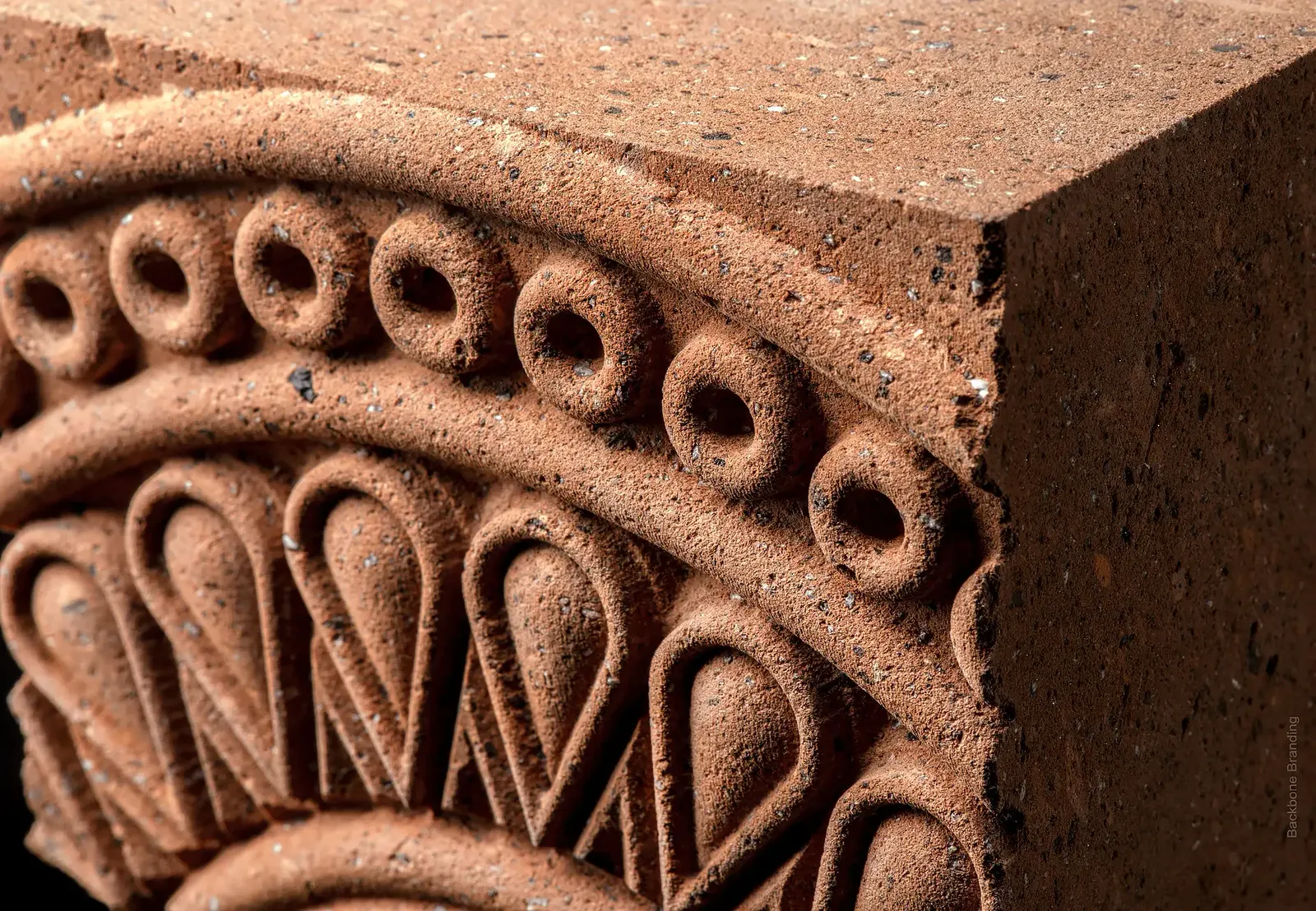
Tuff was born from volcanic ash. The ancient volcanoes of the Armenian Highlands threw out vast clouds of ash, which settled, compacted and over time became stone. That is why tuff is light and porous.
Its colour depends on the minerals in the ash. Tuff can be pink, red, orange, yellow, violet or black.
A stone that is easy to carve
Freshly quarried tuff is soft: it can be sawn and cut with hand tools. In the open air it slowly hardens. For centuries Armenian masters built houses and churches from it and carved the finest ornament into it.
Its pores make tuff a good insulator. A tuff house stays cool in summer and warm in winter.
Tuff in Armenian history
Much of Armenia's heritage is built of tuff. Zvartnots, a 7th-century church near Etchmiadzin, now stands in ruins and is a UNESCO World Heritage site. Ani, the medieval capital once called the city of a thousand and one churches, was built of red and black tuff.
Khachkars, the carved cross-stones, were cut from tuff and basalt. This art is also on UNESCO's list of intangible heritage. And in the 20th century the architect Alexander Tamanyan and his followers built the centre of Yerevan from pink Artik tuff.
Why the TUFF cap is made of tuff
We were looking for a material that speaks of Armenia without words, and chose the one the country itself is made of: its churches, houses and streets.
Every TUFF cap is cut from a block of tuff and finished by hand. The pattern of pores, the shade and the texture differ from one to the next, so no two caps are alike. On Heritage bottles the stone carries reliefs after Ani and Aghtamar.
When the bottle is empty, the cap remains: a piece of Armenian stone you can hold in your hand.
Read next: How a stone became a cap: TUFF design, Red Dot, Pentawards · What to bring back from Armenia: 9 gifts from Yerevan · The Ararat valley: where the grapes for Armenian brandy grow